Sage 100 FR Gestion Commerciale - SPC
Last updated: April 1, 2026
Prerequisites
This version of Sage 100 is available on a Microsoft Azure environment with possible administration, full SaaS-PaaS-IaaS.
It is exclusively marketed by Sage 100 resellers called integrators with :
Native access to the Microsoft SQL Server Azure engine.
Access to Sage 100 SPC-specific business objects.
⚠ It is strongly recommended that you contact your IT partner or Sage integrator to establish the connection of your accounting software.
BE CAREFUL: This version of Sage 100 DOESN'T REQUIRE the installation of the Objets Métiers library of Sage 100 On Premise. A dedicated version is installed by default by Sage.
If you encounter issues after the installation of the connector, please verify the Objets Métiers library of Sage 100 On Premise wasn't installed during the installation process. If the Objets Métiers library of Sage 100 On Premise was installed by mistake, please follow these steps to restaure the correct version of the the Objets Métiers library of Sage 100 SPC:
Uninstall the Objets Métiers library of Sage 100 On Premise
Update the virtual machine to the current installed version. This will force the installation of the correct version of the the Objets Métiers library of Sage 100 SPC
🛠 PREPARATION (information needed prior to connection)
In order to establish the connection with Sage 100 "On Premise", you will need to retrieve a certain amount of information on your Sage 100 instance and from the integrator partner who installed your Sage 100 instance.
Find the code of your file / company
Retrieve the number of the zone / analytical plan
Retrieve your Azure SQL instance and database name
Retrieve your SQL credentials
Steps 3 and 4 will most likely require to get in touch with your integrator as those are technical informations that you may not have access to.
1. Find your file / company code
This information is visible from your Sage 100 instance at the very top of your page in a menu bar. In the center of this "menu" banner you will see the code of your file (company) indicated.

2. Retrieve the number of the analytical zone/plan
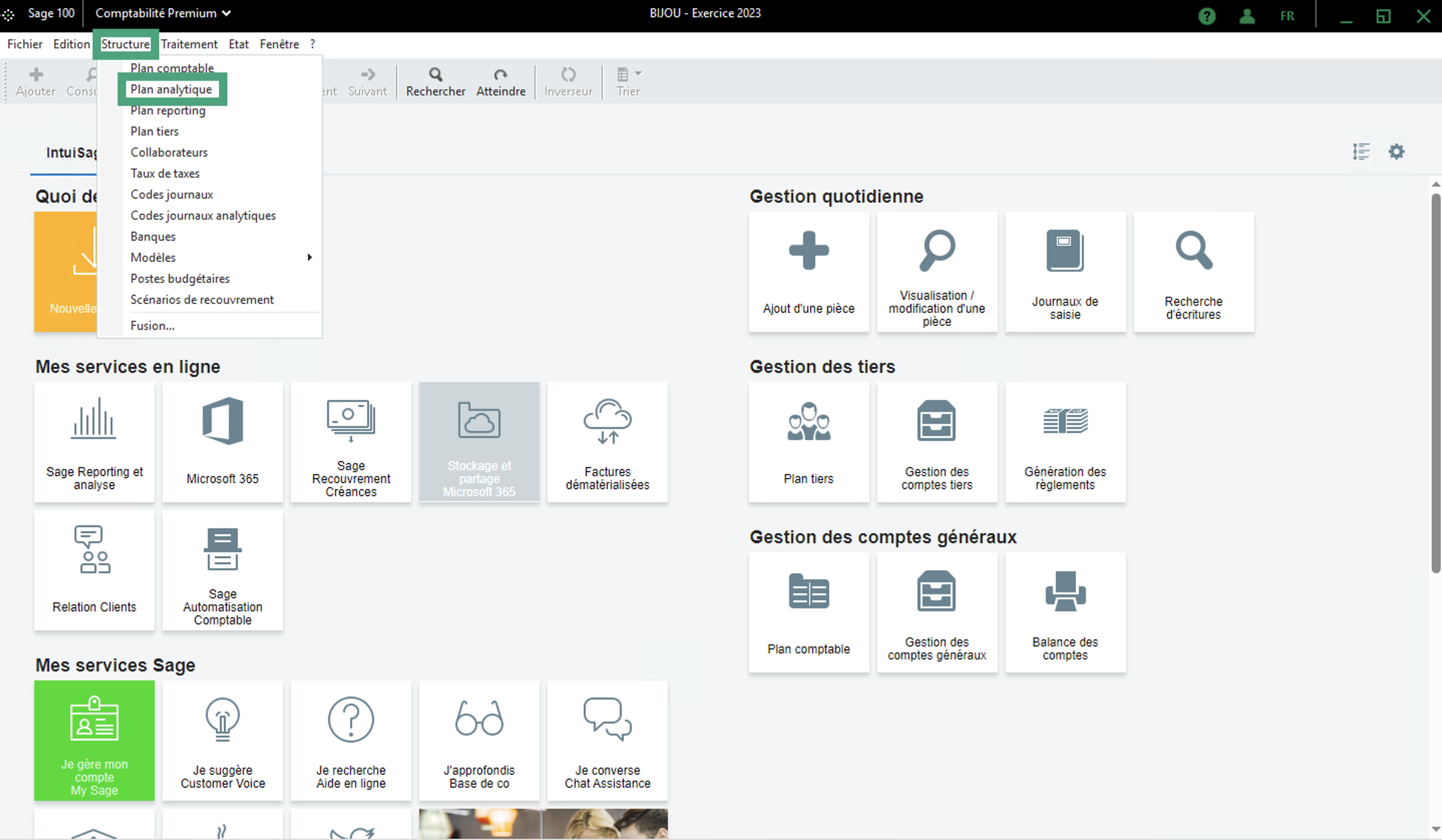
To identify the analytical zone/plan number, you need to follow these steps from your Sage100 instance.
Menu → Structure → Analytical plan
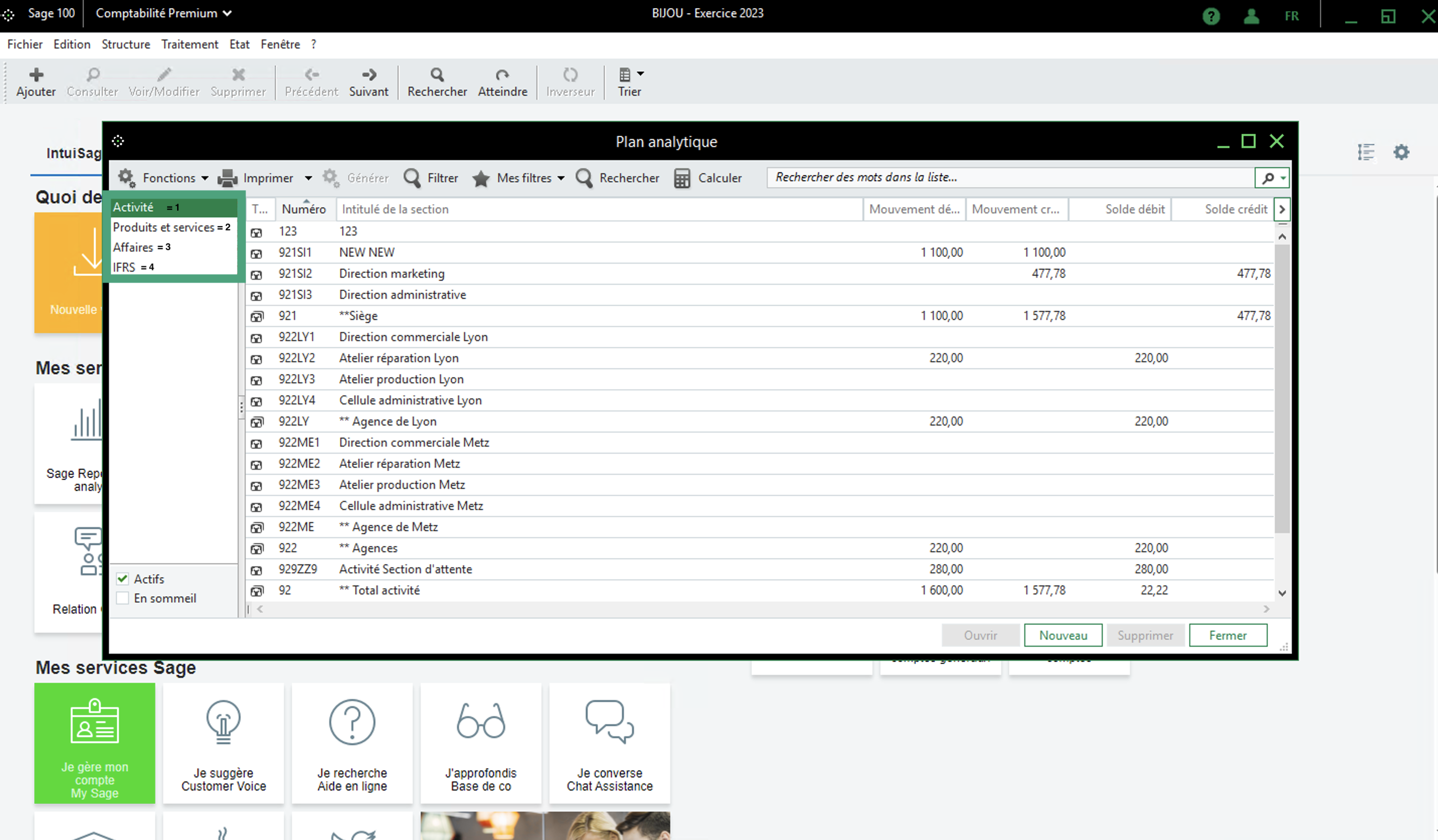
You need to choose the analytical plan to connect. In the example account below we have 4 possible analytical plans
Activity = 1 (fill in the number 1 to select the first analytical plan option)
Products and services = 2 (fill in the number 2 to select the second analytical plan option)
Business = 3 (fill in the number 3 to select the third analytical plan option)
and so on...
3. Retrieve your Azure SQL instance and database name
Afin d'installer l'extension sur le cloud, il vous faudra:
Contact your Sage100 integrator.
Ask them to provide you with the following information:
Your SQL Azure instance (server) name (looks like a code like "xiyxu8z271")
SQL Azure database name (looks like a code like "xim9mokrk4q_AS274AY1ZH")
4. Retrieve your Azure SQL username and password
You must contact your Sage100 integrator and ask them to provide you with the following information:
Sage100 SQL Server Username
Sage100 SQL Server Password
Connexion
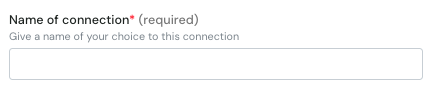
Step 1: Choose a name for your connexion (may vary from tools your are connecting to). This name is purely informational so we recommend the use of the accounting folder that is going to be connected.
Step 2: Click on "Connect" to finalise the connexion and download the local agent

Local agent download and installation
Step 1: Download the Zip file
After the connection step, you will have two options to download and install the local agent on the same server/computer as your Sage 100 instance:
If you have admin access to the server/computer where Sage 100 is installed, you can directly download the program by clicking on Download. Otherwise, a link to download the same Zip file will be sent by email to the email you will provide.
A zip folder will open and offer you several files.
Start the installation of the "local agent" folder with the number corresponding to your Sage version number.
During the installation, you will need to select the "settings.json" file to complete the installation steps.
If Sage 100 is installed on a server/computer that you do not have admin access to, you have the option to send the program by email to the person or company that has admin access to the server/computer where Sage 100 is installed
Step 2: Install the Cockpit (if is has not already been installed)
To install the cockpit, please follow the steps documented on the following article:
📄 Local Agent Cockpit — User Guide
If the Cockpit has already been installed on your server, you can start is as an administrator and go directly to the Sage 100 FR GC section of the cockpit.
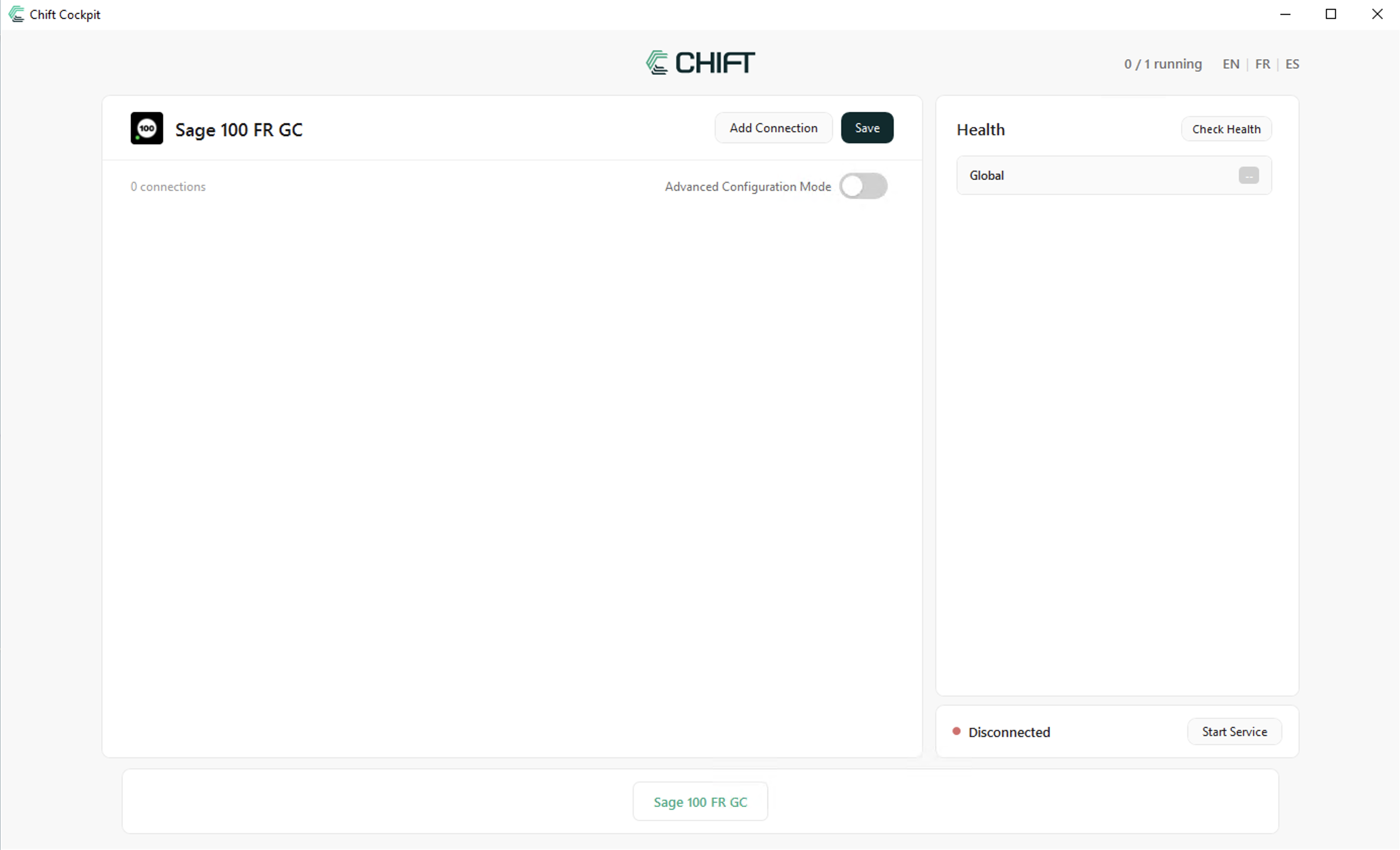
Step 3: Connect your folder through the Cockpit
Local agent download and installation
Step 1: Download the Zip file
After the connection step, you will have two options to download and install the local agent on the same server/computer as your Sage 100 instance:
If you have admin access to the server/computer where Sage 100 is installed, you can directly download the program by clicking on Download. Otherwise, a link to download the same Zip file will be sent by email to the email you will provide.
A zip folder will open and offer you several files.
Start the installation of the "local agent" folder with the number corresponding to your Sage version number.
During the installation, you will need to select the "settings.json" file to complete the installation steps.
If Sage 100 is installed on a server/computer that you do not have admin access to, you have the option to send the program by email to the person or company that has admin access to the server/computer where Sage 100 is installed
Step 2: Install the Cockpit (if is has not already been installed)
To install the cockpit, please follow the steps documented on the following article:
📄 Local Agent Cockpit — User Guide
If the Cockpit has already been installed on your server, you can start is as an administrator and go directly to the Sage 100 FR GC section of the cockpit.
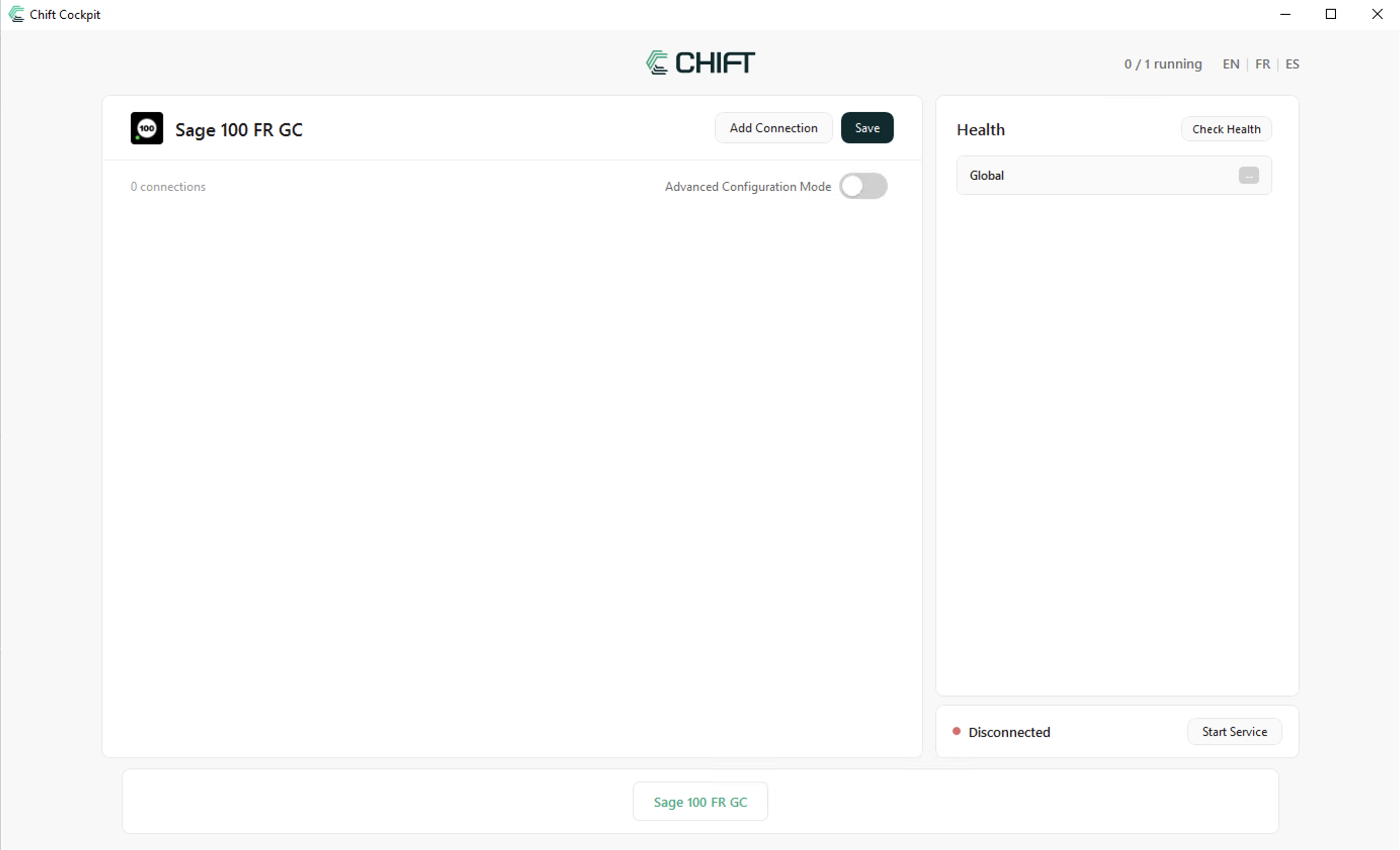
Step 3: Connect your folder through the Cockpit
To create the connexion with your GCM folder, please press the Add connection button on the top of the screen. This will open a new tab that will ask you to select a settings.json file. This file is the file containing all the technical information allowing the cockpit to create the proper connection with your folder. Every folder that you want to connect through the cockpit will need a distinct settings.json that will need to be downloaded separately.
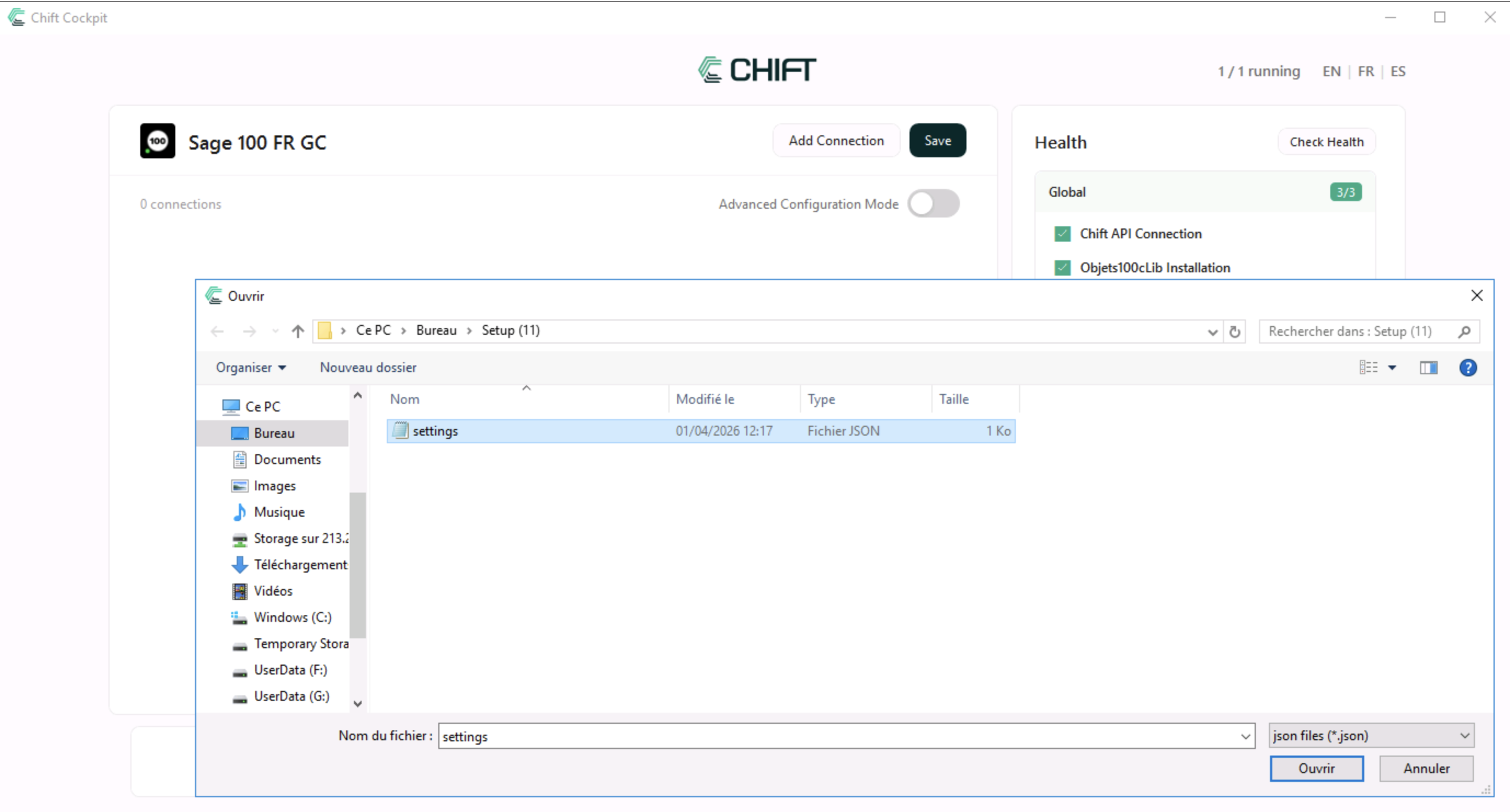
Once the settings.json file has been opened, one more connection should appear on the Cockpit. This connexion has not been configured yet. To start the configuration of this connection, click on the connection to open the configuration menu.
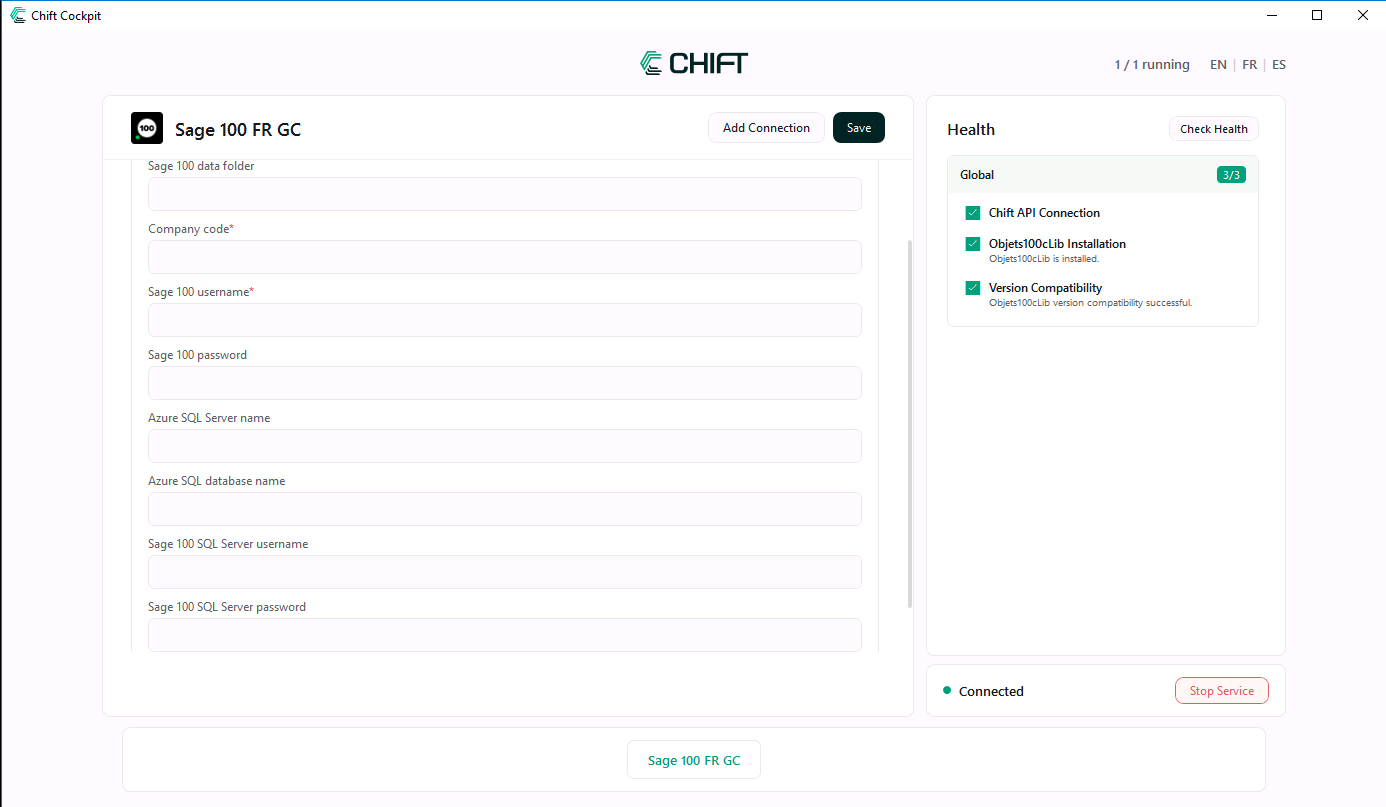
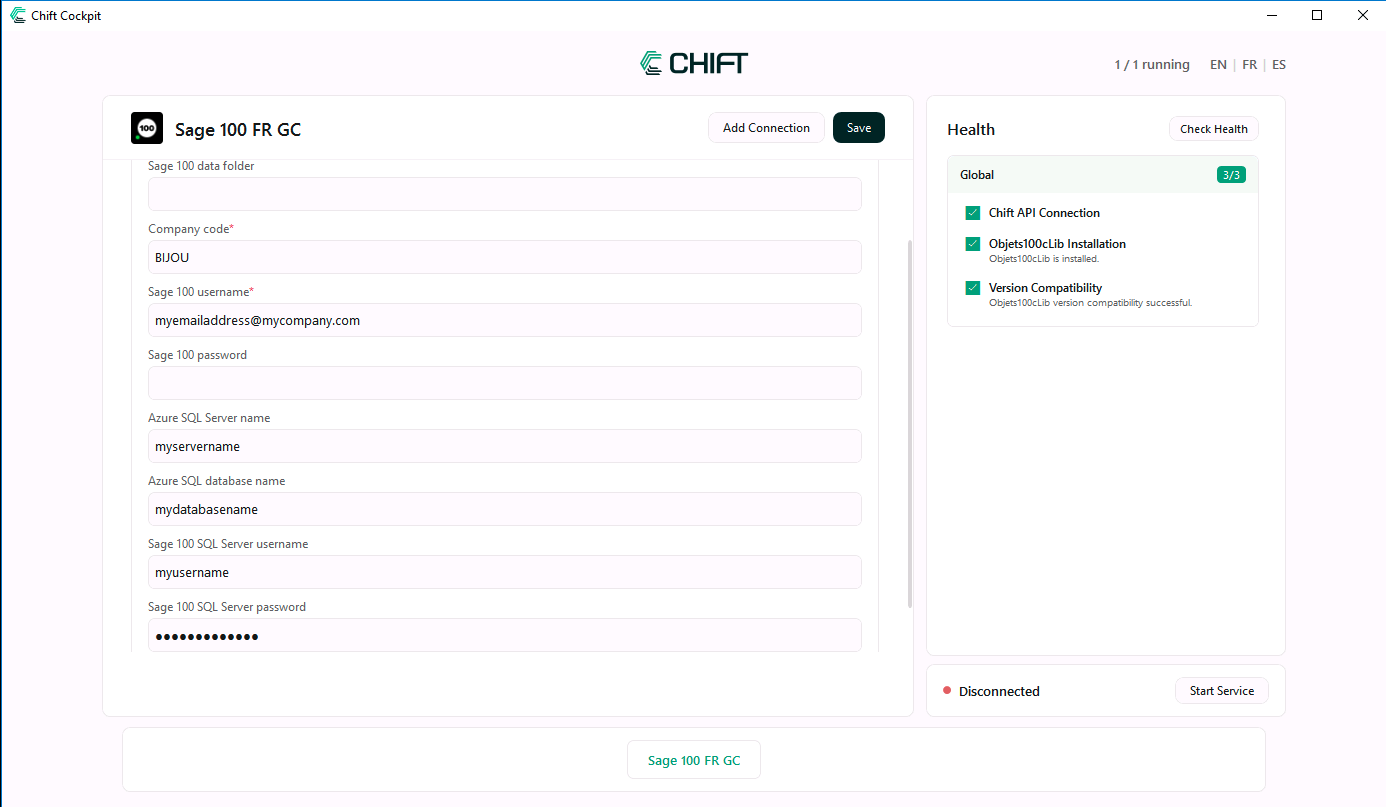
Fill the form with the different values you retrieved from the Preparation stage of the documentation.
Company Code: This is the code of your Company in Sage, from the first step of the Preparation section.
example: BIJOU
Sage 100 username: this is the email of the user used to connect to Sageonline. This user must have access to the folder that you are connecting.
Azure SQL Server name: this is the name of your SQL server (should finish with .windows.database.net). You can remove the final part to only provide the short version but both version should be handled by the connector. You should have requested this to your integrator during Preparation - step 3.
Azure SQL database name: this is the name of your SQL database. You should have requested this to your integrator during Preparation - step 3.
Azure SQL Username: this is the username of a SQL user that has access to the database of the folder that your are connecting. You should have requested this to your integrator during Preparation - step 4.
Azure SQL Password: this is the password of the SQL user that you just provided. You should have requested this to your integrator during Preparation - step 4.
You can keep all other fields blank, those are not used by the SPC version of the connector.
Once all fields are filled, you should have something similar to this:
You can then press the Save button to save all the values provided. Once the changes have been saved, a new window will appear to ask you if you want to restart the service:
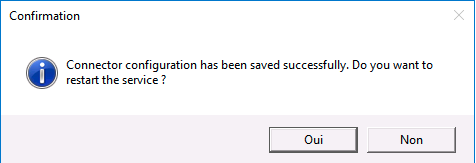
All changes are only applied when the service start. So if you want those changes to be applied, you need to press yes. If you want to add more connection before starting the service, you can press no and add the related connection before starting the service.
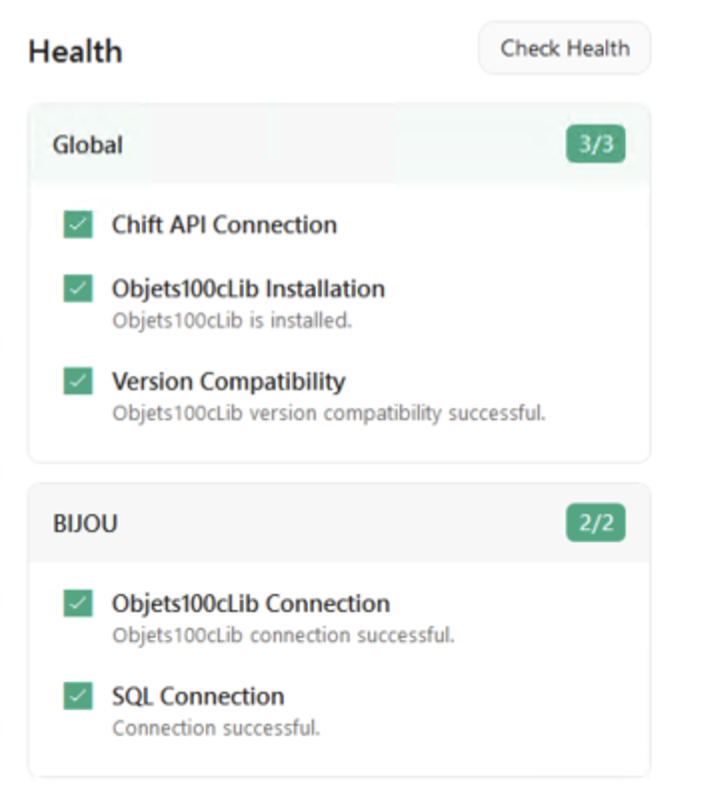
Once the service has restarted, you can test your connections thanks to the Health module. To run the test you can simply click on the "Check health" button.
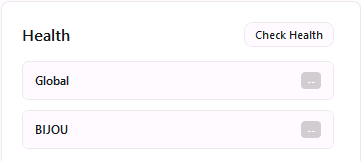
The service will run some tests to make sure that everything has been configured properly. If you have any error in the configuration, some of the tests are going to fail with error messages that should indicate the element causing the issue (invalid password, no access to the folders, etc).
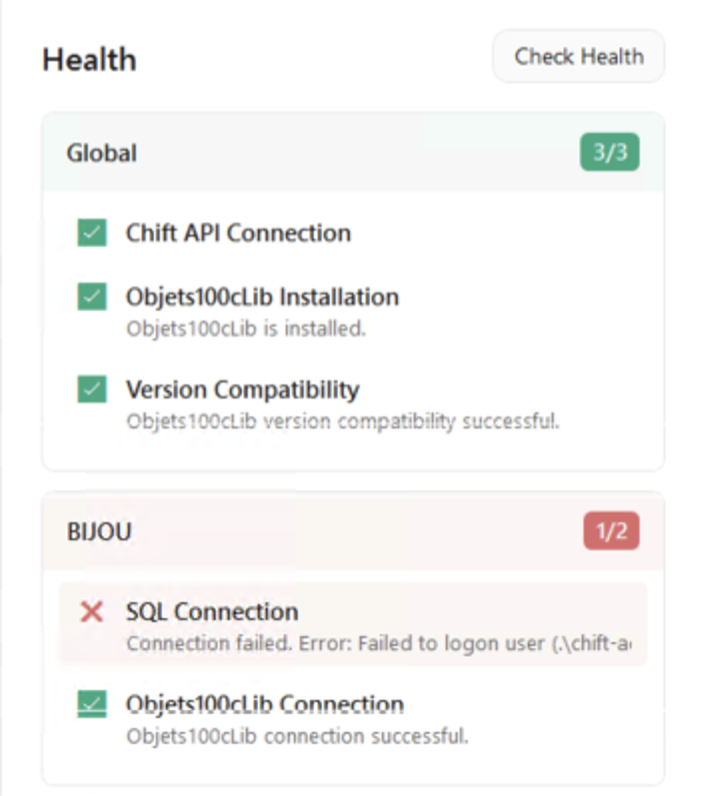
If everything has been setup properly, you should see all tests appear in green. Your connection should thus be fully functional.